Chapter Nine: The Adoption Files
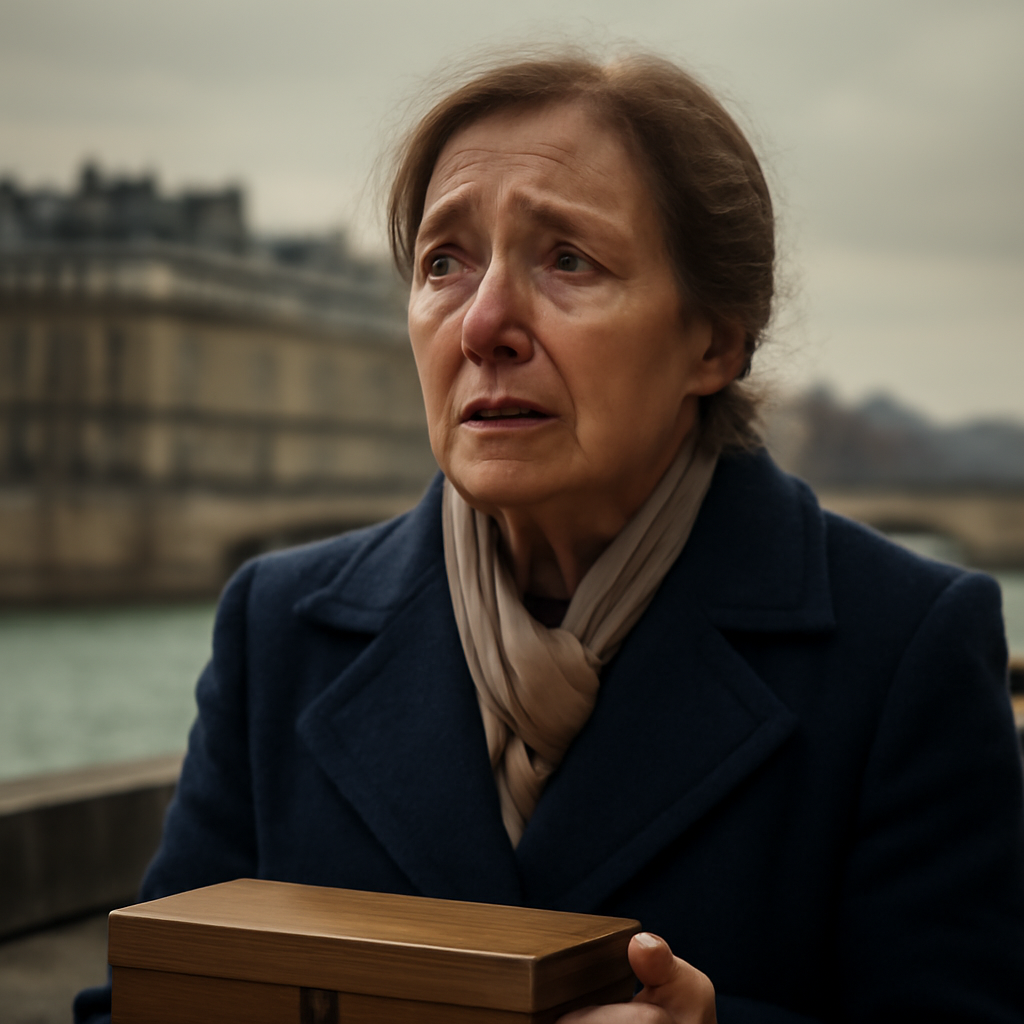
The following day broke beneath a pale, uncertain sky. Paris was washed clean by overnight rain, the streets glistening like ink. Delilah sat at the small desk in her hotel room, sipping lukewarm coffee, her eyes fixed on the notes she had written the night before.
March 1963 – Pont de Bir-Hakeim – Fire – Michael Donovan – Adoption File.
The words felt heavier than ink — like anchors pulling her deeper into the past. Every path she took seemed to circle back to that same year, that same bridge, that same burning silence.
The museum’s archivist had told her there might be government adoption records stored at the Ministère des Affaires Sociales — the Ministry of Social Affairs. Perhaps, if luck was with her, those files might contain the last missing piece.
Delilah folded her notes, slipped the photograph into her purse, and took her umbrella. The morning air was cool and sharp as she stepped into the waking city. The streets smelled faintly of rain and roasted chestnuts from a vendor on the corner.
Her knees ached as she walked, but her pace did not slow. She had come too far — crossed oceans and decades — to turn back now.
The Ministry’s building was grand and austere, with marble steps and tall iron gates. Inside, the corridors were lined with old portraits and the soft echo of footsteps. A young clerk guided her through security and up to the archives department.
The archivist on duty, a bespectacled man with thinning hair, listened patiently as Delilah explained her request in slow, careful French. When she finished, he nodded gravely.
“Adoption files from the 1950s and 60s are not easy to access,” he said in English, noticing her relief. “Most are sealed for privacy. But if you have proof of relation, perhaps something can be done.”
Delilah opened her purse and produced the papers she had collected — John’s letter, the name Michael Donovan written in the margins, the old adoption note she’d found in Lyon. “My husband,” she said softly. “And his twin brother. I only want to understand what happened.”
The archivist studied the documents, his expression softening. “Wait here,” he said quietly. “I will see what I can find.”
Delilah sat in a narrow wooden chair as minutes turned to nearly an hour. The murmur of voices drifted from other rooms, mingled with the rustle of papers and the soft ticking of a clock on the wall.
She stared at her hands, folded tightly in her lap, remembering the last time she had waited like this — in a hospital hallway, forty years ago, when John had survived his first heart attack. The same stillness. The same dread that something precious might be lost forever.
Finally, the archivist returned, holding a thin folder in his hands.
“I shouldn’t be showing you this,” he said quietly, “but there was a duplicate record. It escaped the sealing order because it was marked as incomplete.”
Delilah’s breath caught. “May I see it?”
He nodded and slid the folder across the table. “Handle it gently. It’s over sixty years old.”
She opened it with trembling fingers.
Inside were several brittle pages — handwritten forms, signatures, and a faded photograph of two boys. Even through the blur of age, she recognized them immediately. John and Michael.
They looked no older than eight. Their faces were smudged with soot. Behind them stood a woman whose expression was weary and kind — their caseworker, perhaps.
Delilah traced their faces lightly with her finger. “My God,” she whispered. “You were just children.”
The next page was a placement record dated November 1949: “John Davis (formerly Jonathan Donovan) placed with adoptive parents, Robert and Elaine Davis.”
The following entry chilled her.
“Michael Donovan — transferred to temporary medical facility following incident. Later relocated to international adoption program, destination France.”
Delilah turned the page. There were notes written in a different hand, dated more than a decade later — March 1963. Her pulse quickened as she read:
Contact made between brothers after 14 years of separation. Meeting arranged privately in Paris under supervision of intermediary. Outcome: unresolved. File closed by request of M. Donovan.
She frowned. “Intermediary?”
The archivist leaned closer. “It means a caseworker, perhaps. Someone arranged the meeting.”
Delilah scanned the final page. It contained a brief summary, signed by a name she recognized faintly — Henry Caldwell. The same man she had visited weeks ago in New York.
At the bottom of the page, a single line was added in red ink, as if written later:
Final note — twin deceased, April 1963.
The room seemed to tilt.
“Deceased?” Delilah whispered. “Which one?”
The archivist frowned. “It doesn’t say.”
Her hands trembled as she closed the folder. The air felt suddenly too thin, the light too sharp. “There must be another record,” she said, her voice breaking. “A death certificate, a report — something.”
The archivist hesitated, then glanced toward a locked cabinet. “There may be supplementary materials, but those are classified. I cannot show them to you without authorization.”
Delilah’s voice trembled. “Please. I’ve come all this way. My husband’s gone. His whole life was built on this secret, and I need to know what it means.”
He studied her face for a long moment, then sighed. “Five minutes,” he said softly. “I will leave you alone with it. But when I return, the file goes back.”
The supplementary folder was small, bound with red string. Delilah untied it carefully, the paper whispering beneath her touch. Inside were two documents.
The first was a letter from Henry Caldwell, dated April 1963 — just weeks after the meeting at Pont de Bir-Hakeim.
To Whom It May Concern,
Following the arranged meeting between the Donovan twins, an altercation occurred near the Seine. Witnesses reported raised voices. Both men were seen leaving the bridge area; one returned to his lodging later that evening, the other did not. The body recovered from the river was identified as Michael Donovan, though confirmation was complicated by the resemblance between the two men. Due to lack of conclusive evidence, the case was closed without prosecution.
Delilah’s heart stopped.
She read it again, slower this time.
The body recovered… identified as Michael… resemblance complicated identification.
Her vision swam. What if — what if it hadn’t been Michael?
What if the man who came home to her, the man she married, the man she buried — wasn’t John at all?
The thought struck her like lightning, terrifying in its clarity. The photograph, the silence, the guilt — it all aligned now in a way that made her stomach turn.
John’s occasional nightmares. His sudden fear of water. The way he had sometimes looked at her, almost as if she were a stranger.
She felt sick. “No,” she whispered. “No, that’s impossible.”
Her trembling hands lifted the second document — a note written in a woman’s hand.
Recovered personal effects: photograph (Eiffel Tower), lighter engraved “J.D.”, and letter fragments in English. All returned to next of kin — Mrs. Delilah Davis, U.S.A.
The world fell silent around her. The photograph she had found — that photograph — had been taken from the body in the river.
Delilah sat frozen, her breath shallow. It felt as if the ground had opened beneath her.
She pressed a hand over her chest, trying to breathe. “Dear God…”
If the records were right, then the man who had died in Paris wasn’t Michael. It was John.
And the man who had come home to her — who had shared her bed, her life, her grief — was his brother.
Michael.
The archivist returned a few minutes later to find her pale and shaking. “Madame, are you alright?”
Delilah nodded numbly, her voice barely audible. “Yes,” she said, “I think I finally understand.”
He took the folders gently and locked them away again, glancing at her with concern. “Some truths,” he said softly, “are harder to live with than ignorance.”
Delilah managed a faint, broken smile. “Maybe. But lies are heavier.”
She thanked him quietly and walked out into the corridor, her legs unsteady. The marble floor gleamed beneath the overhead lights, cold and merciless. Outside, the city’s noise returned all at once — cars, footsteps, distant laughter — but it all sounded far away.
At the base of the steps, she stopped and lifted her face to the gray sky. The air tasted of rain and iron.
The truth was unbearable, but it was hers now.
John hadn’t come home. Michael had.
The man she had loved for fifty years was not her husband — but her husband’s brother, living beneath another’s name, carrying a guilt too great to speak.
Tears blurred her vision as she whispered into the wind, “You carried it all this time… didn’t you?”
Somewhere, in the distance, a church bell tolled — slow and mournful.
Delilah clutched the wooden box close to her chest. The letters inside suddenly felt heavier, alive with new meaning. She wasn’t sure if she felt betrayed, or blessed to finally know the truth.
Perhaps both.
She turned toward the river, her steps slow but sure. The Seine awaited — dark, endless, and patient.
And somewhere beneath its surface, the truth had been waiting for her all along.