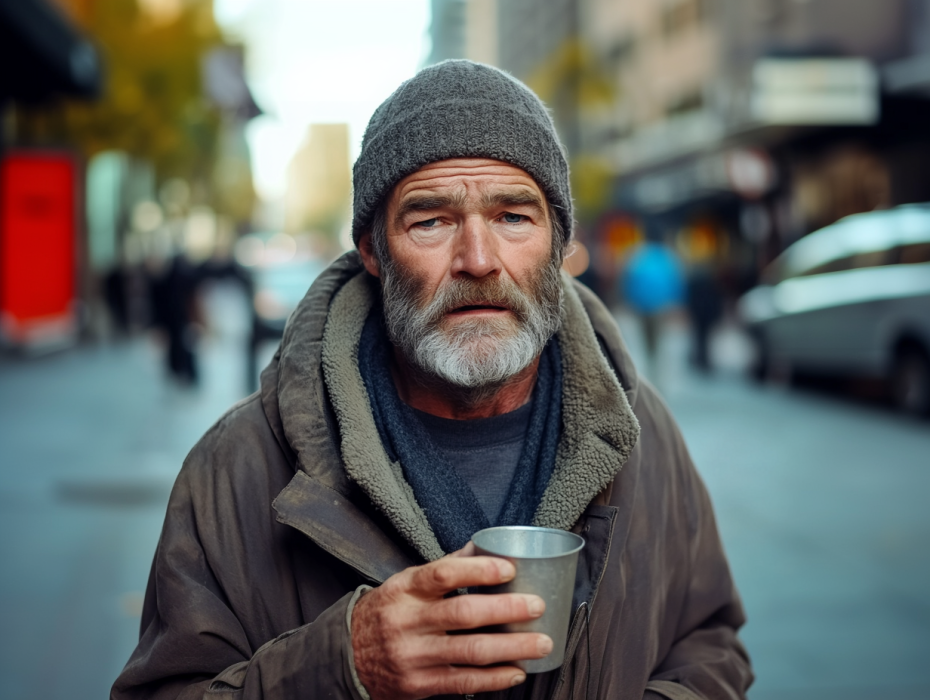
He turned away and stood with an empty cup in his hand again. He said nothing, just stayed in places where people might drop change, back straight, bag with his soaked clothes tucked under one arm. One hand rested on Lucky’s back. Hours passed. Nobody stopped. Nobody even slowed.
A man in a hoodie passed twice. On the third pass, he muttered, “Get a job,” without looking. Joshua didn’t react. Energy was gone. Outside a convenience store, someone flicked a coin near his feet. It bounced, rolled under a bench. He didn’t chase it.
By late afternoon, knees burned, calves cramped. Morning sandwich long gone. Lucky limped softly—one paw must’ve landed wrong on a crack. Joshua crouched, whispered, “We’ll stop soon.”
He moved toward the city’s edge. Fewer people, fewer cops, fewer warnings. Past the loading docks, he found a wall stretch with crates stacked high, a sloped concrete edge just enough to lean on. Dry, quiet, half-shielded from wind. Lucky curled up immediately. Joshua dropped his bag behind the crates and sat, legs out, arms crossed. Shoes soaked. Didn’t matter. This wasn’t comfort. This was disappearance.
Across the street, a broken light flickered over a backlot door. Beside it, a narrow alley cut between buildings. No cameras. No movement. Joshua stared. Just a shortcut, probably. But something felt wrong. He looked away.
Joshua was asleep when a scream tore through the silence, sharp and panicked. Eyes flew open. Lucky jerked upright, ears perked. Adrenaline flooded Joshua fast. That hadn’t sounded like a drunk shouting or a couple arguing. That sounded like danger.
He rose quickly, grabbed his bag, crouched low. “Quiet,” he whispered to Lucky, finger up. Lucky froze, alert. Another voice echoed faintly—muffled, male, aggressive. Joshua squinted toward the alley across the street. Dark. Too dark. But something was happening in there.